
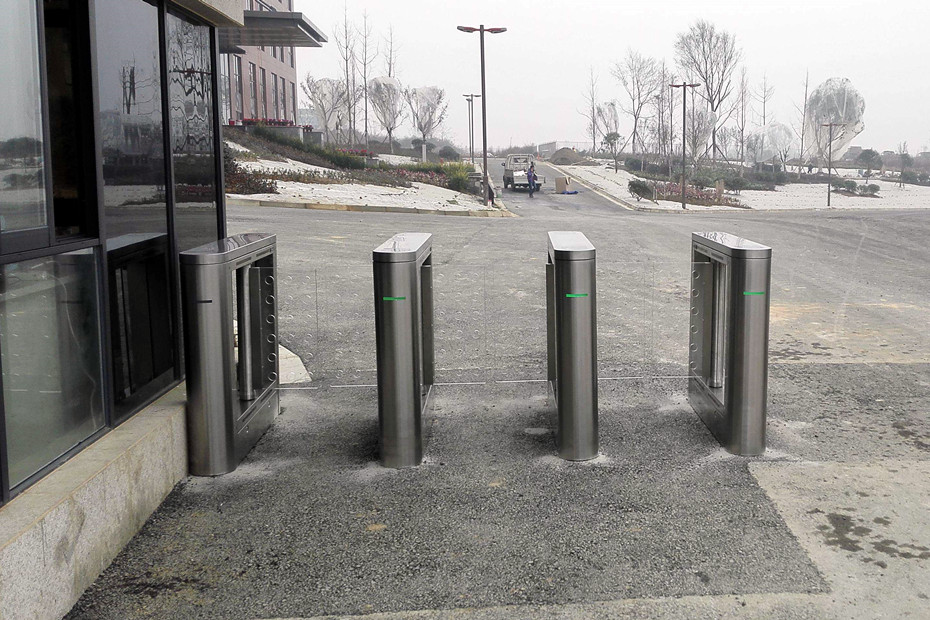
Last updated on: September 6th, 2026 15:57 pm
Installing a turnstile gate is the most critical phase of any access control project. A poor turnstile gate installation leads to frequent mechanical jams, safety hazards, and costly rework—while a proper installation ensures decades of smooth operation.
At MairsTurnstile, we’ve streamlined the turnstile gate installation process. Most assembly work is done at our factory; your on-site team only needs to handle final positioning, wiring, and commissioning. This guide covers everything from site preparation to the final safety test, helping you avoid the top 5 mistakes that delay projects.
Installing a turnstile gate is a critical step in securing your facility. A proper installation ensures the equipment operates smoothly, lasts for years, and provides the security you expect.
For many buyers, the big question is: “How difficult is the installation?” The answer depends on the preparation.
If you purchase from a reputable manufacturer like MairsTurnstile, most of the complex work is done in the factory. Your on-site team handles the final positioning, fixing, and connection. This guide will walk you through the entire process, from preparing the site to the final test.

1. Critical Pre-Installation Site Preparation
The success of your turnstile gate installation depends almost entirely on the preparation work done before the equipment arrives. Rushing site prep is the #1 cause of failed turnstile gate installation</strong> projects. Ensure these conditions are met before the equipment arrives.
1) Floor & Structural Requirements
Level Ground: The floor must be perfectly horizontal. Uneven surfaces twist the chassis, reducing the lifespan of the swing/flap mechanism. Use a 2-meter level to check.
Cured Flooring: Whether marble, tile, or concrete, the final floor surface must be fully cured and laid before fixing the gate.
Waterproofing (Outdoor): For outdoor <strong>turnstile gate installation</strong>, ensure the foundation has a slope to prevent water from pooling around the base.
2) Electrical & Conduit Checklist (Critical)
Getting the wiring right is the most critical technical step. Mistakes here can lead to costly rework.
Conduit Material: Always use 6-point galvanized steel pipes for buried conduits to prevent crushing and corrosion.
Cable Reserve: Leave at least 3 meters (10 feet)of cable protruding above the ground at each gate position. Never cut it flush—this is a lifeline for future maintenance.
Clear Labeling: Every single cable (Power, RS485, Sync, Fiber) must be tagged with its destination. Provide a wiring diagram to your team.
Inter-Gate Communication: For multiple lanes, bury 1-2 spare conduits between each cabinet for SYNC and future expansion lines.
Fiber Optics: If using optical fiber, ensure it’s laid, tested, and terminated with an <strong>SC connector</strong> interface (as per MairsTurnstile standard).
Power: A stable 220V AC source with a 3-level distribution box is required for on-site commissioning.
2. Essential Tools for Turnstile Gate Installation
Gather these tools beforehand to avoid project delays:
Drilling: Hammer drill with 12mm (1/2 inch) masonry bits.
Fasteners: M12 anchor bolts or high-quality expansion bolts (depth 10- 13 cm).
Leveling: Magnetic spirit level (minimum 1 meter long).
Wiring: Multi-meter, wire strippers, and a set of precision screwdrivers (Phillips & flathead).
Sealing: Neutral silicone sealant (glass glue) for waterproofing the base.
Marking: Permanent marker and chalk line.
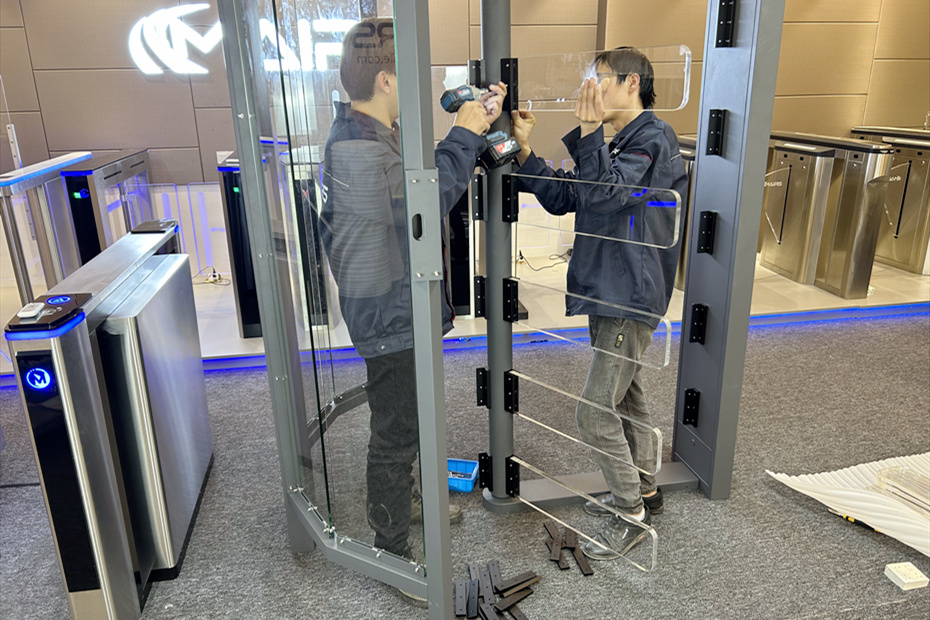
3. Standard Turnstile Gate Installation: Step-by-Step Process
Detailed professional steps for installing a pedestrian turnstile gate, including fixing, wiring, and debugging.
Step1: Positioning & Marking
Place the chassis in the exact position according to architectural drawings. Use a level to ensure perfect vertical and horizontal alignment. Once level, trace the base outline with a marker and mark the bolt holes via the mounting holes inside the chassis.
Step2: Drilling & Anchoring
Move the chassis aside. Drill holes at marked spots to a depth of 10- 13 cm using a 12mm drill bit. Insert M12 anchor bolts. Place the chassis back and tighten the nuts firmly. Pro Tip: Apply silicone sealant around the base edge after tightening to prevent water ingress.
Step3: Electrical Wiring & Connections
Open the access panel to the control board.
Power: Connect the main 220V cable to the terminal block (strictly follow polarity and grounding).
Peripherals: Wire the card readers, exit buttons, and QR scanners to the designated ports.
Networking: Connect SYNC cables between multiple gates and attach the network/fiber cable.
Warning: Always double-check the wiring diagram provided in the specific user manual. Reverse polarity can damage the main board.
Step4: Initial Power-On & Mechanical Debugging
Turn on the power. Check the control board for error indicators. Use the maintenance buttons to test manual opening/closing. Verify all sensors (obstacle detection, anti-pinch) are responding correctly.
Step5: Parameter Configuration
Using the control board’s menu or a connected computer, adjust the settings for your environment and configure: Opening/Closing speed (adjust to pedestrian flow).
Passage direction (One-way/Two-way).
Auto-close timer and alarm sensitivity.
Emergency fail-safe mode (Open on power failure).
Step6: Full System Integration Test
Test every authentication method (Card, Fingerprint, Face ID, QR). Simulate tailgating and forced entry to ensure alarms trigger. Walk through the lane multiple times to check smoothness. Secure all covers and perform a final cleanup.

4. Installation Variations by Turnstile Type
While the core turnstile gate installation steps are similar, note these differences.
Tripod turnstile Requires precise arm alignment. Focus on the centering of the rotating mechanism.
The swing turnstile needs extra clearance for the swinging arms. Ensure no obstacles within the swing radius.
Speed gates and flap barriers have highly sensitive sensors. Requires meticulous optical alignment during installation.
Full height turnstile with a heavy chassis requires a stronger foundation and deeper anchor bolts.
For model-specific wiring diagrams, check the Technical Downloads section or contact our support.
The following is a tripod turnstile installation video demo for your reference only.
It should be noted that different types of turnstiles may have different design drawings and pre-embedded circuits, and then the turnstile gate installation process may vary. For different types of turnstiles, we will also provide detailed turnstile installation instructions.
As is well known, turnstiles are divided into many types, and common ones include: tripod barrier gate turnstile, swing barrier gate turnstile, flap barrier security gate turnstile, speed gate security turnstile, full height security access control turnstile, and different types of security gate turnstiles have some differences in installation steps and processes. If you want to understand the installation of different types of turnstiles in detail, please refer to the following articles:
Tripod barrier gate turnstile installation
Flap barrier security turnstile installation
Swing barrier gate turnstile installation
Speed gate security turnstile installation
Full height turnstile security gate turnstile installation
5. Top 5 Turnstile Installation Mistakes (And How to Avoid Them)
Based on our after-sales data, these are the most frequent failures during turnstile gate installation.
Skipping the Level Check: Even a 5mm tilt causes long-term mechanical wear. Fix: Always use a 1m level, not a small bubble level.
Cutting Cables Too Short: If the cable doesn’t comfortably reach the control board with slack, you’ll need an unsafe splice. Fix: Always reserve the 3-meter loop.
Ignoring Waterproofing (Indoor & Outdoor): Cleaning fluids and floor wash seep into the base, rusting bolts and shorting boards. Fix: Always apply silicone sealant around the base.
Confusing SYNC and Network Cables: Mixing up these leads prevents lanes from communicating. Fix: Color-code and label every single wire before pulling.
Forgetting the Spare Conduit: Upgrading to facial recognition or adding intercoms later requires extra lines. Fix: Always bury one spare 6-point conduit per lane.
6. FAQ About Turnstile Gate Installation
How long does a standard turnstile gate installation take?
For a single lane, a professional team typically completes the mechanical fixing and wiring within 2-3 hours. Commissioning and system integration testing may take an additional 1-2 hours. For multiple lanes, allow 1 day for every 4-6 units.
What type of anchor bolts are best for turnstile gate installation?
We strongly recommend M12 expansion anchor bolts or chemical anchors for heavy-duty full-height gates. For standard swing or tripod gates, M12 galvanized expansion bolts with a 10- 13 cm drill depth are sufficient and cost-effective.
Can I install a turnstile gate on an uneven floor?
It is not recommended. An uneven floor twists the chassis and causes mechanical failure. If unavoidable, you must use custom-height shims to level the chassis, but this often voids the warranty on the mechanical parts. Always surface-level the floor first.
Do I need a specialized electrician for turnstile wiring?
Yes. While the mechanical fixing is straightforward, the 220V power connection and low-voltage peripheral wiring must be handled by a certified electrician to avoid short circuits and equipment damage. MairsTurnstile provides a detailed wiring diagram with every shipment.
Need professional support for your turnstile gate installation?
A successful turnstile gate installation relies on precise preparation and expert execution. At MairsTurnstile, we don’t just sell hardware—we provide:
Comprehensive Manuals: Step-by-step guides with color wiring diagrams for every model.
Remote Technical Support: Our engineers are available via video call to guide you through tricky steps.
On-Site Commissioning: For large-scale projects, we dispatch senior technicians for final debugging and staff training.
If you are unsure about any part of the turnstile gate installation or need specific drawings for your project, contact our support team immediately. We are happy to help ensure your access control system runs flawlessly from day one.
For many customers who first touch the turnstile gate, the first question that may come to mind is if I buy this security turnstile gate from your company, how can I install such a big thing? Do you provide installation services after I buy from your company? This is the first question that many customers ask, but through the above content, I believe that most customers have mastered how to install the turnstile gate and have no such concerns.
The above is all the content of the turnstile gate installation. Of course, this is only a general summary. If you can strictly follow the above steps to install, I believe it should be very simple to complete the turnstile gate installation. In addition, it must be noted that the products of each manufacturer should be differentiated, but a qualified product should be equipped with detailed installation instructions. Each of our turnstile gates is equipped with detailed installation instructions and use instructions. Of course, if you buy turnstile gates from Mairs, you can contact us at any time if you have any problems during the turnstile gate installation process. We will provide professional technical support.
In addition to careful attention during installation, turnstile gate maintenance is also very important. Let’s briefly introduce turnstile gate maintenance. For turnstile gate maintenance, you can view another article: turnstile barrier gate maintenance